Photos

All photos on this blog, Wildlife on Wheels, are taken by me. If you want to use any of my photos for anything other than personal use, send me an email and we'll talk about it. The email address is listed in the sidebar on the right .

Save Dunmanus Bay

Showing posts with label Dunmanus Bay. Show all posts

Sunday, March 13, 2011

Spring is slowly emerging


Last week, I went out into the cold afternoon to go for a quick peek at the bay. It was strange that I had not been out for months. Not since Francis had become more weak. I felt I had to keep an eye on him, just in case..
The post mortemresults have come back from the lab. I have been told that next week I'll get a copy of the report and I will be able to collect the death certificate. With that i should be able to get on with my life. Being able to get a bereavement's grant, get things done at the bank, etc. About time too; it is now 6 weeks since my loving hubby passed away.
Also, his death will now be registered finally too. my A.P. (automatic pilot) is still holding onto the control of my life. Seems as if it is all just floating past me.

The winter has not left really; yesterday night frost still sends the Invertebrates into hiding and could be killing off Frog spawn too, off course.


Near me, theere is still no sign of the spring beauty. It is usual the first Wildflower I see in the hedge across the speedramp where I live. That one has not shown yet. But I did manage to find it opposite the Church of Ireland. Not in flower yet, but well on the way. It is of course, that member of the Buttercup family, the
Lesser Celendine, Ranunculus ficaria


Ivy berries ripening. hedra helix


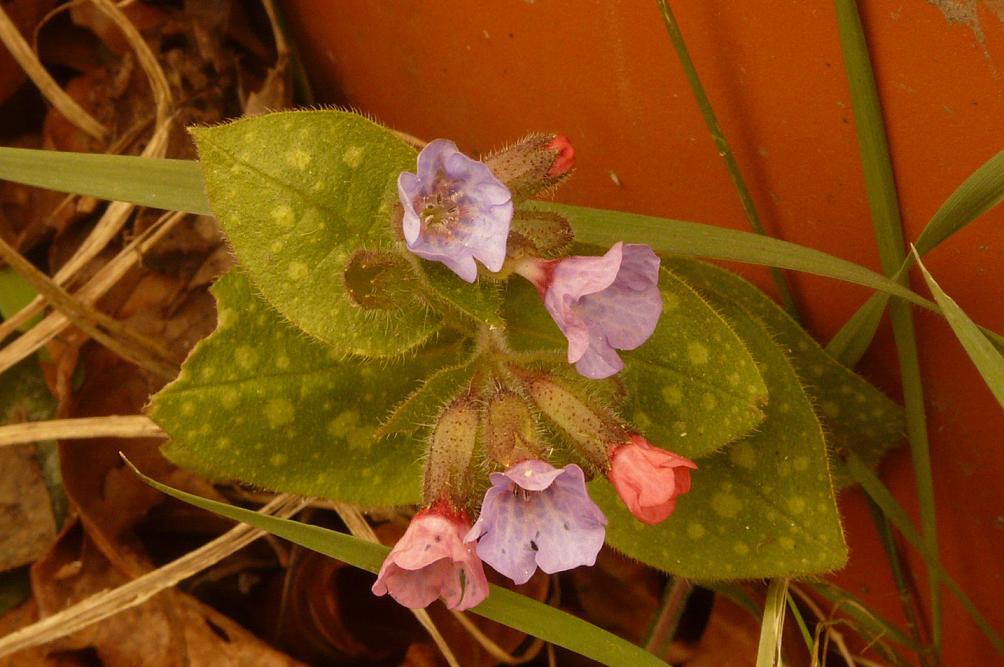
If somebody can tell me the name of these little beauties, please leave a comment.


Greenfinches, Chloris chloris, in the garden.

female Chaffinch, Fringilla coelebs

Tuesday, November 18, 2008

Can you ID this summer wader for me?

While looking forand tidying my photos and folders, I cam upon these, which I have not shown before because I was way too busy showing you the Butterfly/Wild Flowers photos and all I did post were those and a few Grey Heron/Black headed Gulls.

They were taken in mid July (23); so it could not have been a Whimbrel I think, unless 'ours' is one which is not a migratory Whimbrel but a resident one.
I had not seen any Whimbrel during the summer, so it would be strange if, when it would be a resident, it just appeared on this one day.

However, to me it looks as if it has too much of a blue-grey-ish tint to be a Whimbrel, but perhaps some other specie? To me it really looks "blueish in a way.


Also for you, 2 long Mute Swans which were begging me to come to the fore.

Saturday, October 18, 2008

Hedgerow Illuminated

I've always loved hedgerows; they are so alive with little colonies, and are in fact a warren of different lifeforms, all varying in size, specie or source of food needed to keep them alive. And ecerytime I am astonished to see predator and prey living quite close together within these living high rise communities. Here a House Sparrow takes advantage of the veggies growing in his roof terrace, and whilst waiting for the crop to ripen he feeds on the Insects attracted by the safety the leaves and buds of this Wild Ivy offered. Which in turn had to fight the Holly for space on the hedgerow to growAnd although seeing Holly with its berries delights me, I am not so sure of the fruit the next hedgerow offers to us and more importantly, the Birds and other creatures depending on them.And down the far end of the bay, where I usually stop for photos of Herons or Little Egrets, something else seemed illuminating the landscape today, right on the inner most bank I found these Nasturtiums, obviously escaped from either garden or more likely a tidy towns' planter, These Nasturtium would have the perfect view over the bay from where they grow and look at this,
While this is the view eastwards into the heart of Dunmanus from the bridge at the COI.
also this gives a good indication of the width of our cosy bay, and the distance my Lumix needs to cover to capture Herons, Egrets or Cormorants; all favouring the deeper end which runs along the far bank with the trees.
I could not resist a picture of this late blooming BrambleOne thing is for sure: One truckdriver is not very happy to fork out the money for new lights and whatever damage he caused to his truck. And I wonder what will be living in these lights in a year, say.

Monday, September 22, 2008

Egrets and Micro Moths.

For a while now I have changed my bay visit routines, and have changed these to the high tides in the morning. I initially had changed this to maybe catch a sight of an Otter –or perhaps 2? - And the Common Terns, I would love to see again also.

It has been very cold in the mornings though, which is similar across these Islands.
Yesterday I had taken all my morning photos in RAW, forgetting that I’d loose the EZ in doing so, because the picture quality jumps back to 7megapixels automatically. With the EZ I loose this, but still there are that situation when 18x zoom is not enough. However I also had my pictures of those white birds, over exposed and so not much lost there. Only this morning did I manage a decent picture, the problem is just that they are right across the bay. They do fly in from the west, so perhaps I can find them a mile further on, at the shingle strand, a few hours before high tide, one day where they would be a lot closer to the road than here. Just have to wait another week and a half at least, for this to be at a suitable time. What was unfortunate though, was that in one of the pictures from yesterday, I spotted a Hooded Crow sitting with the Egrets and it was the slight 'difference' in size was immediately apparent and showed how large the Hooded Crow is!

I have been getting quite a few Moths these days, but often send them packing before reaching for my camera. This little “Face Moth” as I have started to call it, had to wait for a few ID-photos though. The face is very eerie when you look close at the Moth; it is so precise and lifelike, that I really love this little Moth. I had to set it outside of course, which is why I rescued it from the blind in the first place. This one can call in again.


Mute Swan,

5, and 2 species, Herons in the Bay, one Grey and 4 Little Egrets (or Silver Heron, as it is called in Dutch-a beautiful name for a Lovely bird.) Each morning I find them on the same spot, first two, then two more fly past the pier towards the others. And always with one Grey Heron, as if he is standing guard, almost!

Blackheaded Gulls, 10 of which greet me every morning in the bay.


different angles and times of day, images of Dunmanus Bay from the pier and the road.


Cormorant, landing at full speed in the water; was a tat misty, this is the best I get out of it. The Cormorants have had a hard time, constantly being dive bombed by the Black headed Gulls, as soon as they get within 30cm of the BHG 'crèche' of where all ten are sunning in their morning reunion. Two will fly up and pester those blackies away, often being repeated several times before the Cormorants give in.

This little "Face-Moth" I found this norming, by opening up the blinds. Isn't it cute?


This Brown, velvet-like Moth has been entering through my windows several times in the last few weeks. Yesterday perhaps for a last time?

Pied Wagtail at the Pier;

A bit of Dunmanus Bay Art?

Saturday, July 5, 2008

Heading Off Before The Next Rain

As I was checking the weather this morning, wind direction and strength, I also looked up the tides chart for Dunmanus Bay {my local patch}. The weather did not look promising with showers in the air.

However, I had not been at the bay for a couple of weeks and needed to get an update on how ‘the birds were doing these days. The rain had been keeping me indoors, and on the few times I did venture out onto the road, sent me back home again. Not that I am shy of a little shower though, in act I love those summer showers. Not rain like we’ve had in the latter half of June; it makes the road wet and slippery.
The biggest risk to my wheels however is puddles. Some can cover holes of up to 20-25cm deep, and once a wheel get stuck in one of these, strong wo/men power will be needed to get me back onto the road again. And this I don’t carry with me, as I prefer going off on my own.

The morning was nice though; a little moisture in the air, but generally warm and dry. After some work, a visit to the shop for the papers, wine and a box of Felix for the cat, I told Francis I was going for a spin ‘round. Even if I would not be able to do my usual 3km to the little shingle beach, combining the main road along the bay{birds} and the higher back road {wildflowers} I could still go to the bay taking the main road and go as far as the Church of Ireland.

I set off with my camera and a Granny Smith, onto the main road towards Ahakista, I immediately knew I made a grave mistake in taking this road, because Saturday afternoons are mostly booked for weddings! And indeed, I was soon trapped behind & between cars which were looking for the nearest spot to park at the side of the road. Having cars parked at both sides and more trying to park, I had to continue by slipping past one car, wait between that one and the next, let other car go by, and continue in that way along the road. It was a big wedding and it seemed that not only had the whole peninsula turned out to wish the couple well, the rest of West Cork looked also to be here.

Eventually though, I recognised the smell of low tide. I usually time my visits, so that I’m at the bay a little past halfway low tide, so that by the time I get to the little ‘beach’, the tide is starting to turn with two hours still to go. This way I have the best chance of seeing birds like the Grey Herons, Whimbrel, Redshank and also the Grey Wagtails at the little bridge at the strand.
It was six Hooded Crows which greeted me first, six were busy foraging in the mud, in which they have very good camouflage. This is a pity because I find it very hard sometimes to get a good picture of these beautiful Corvids.

A pair of Mute Swans was swimming in the distance, slowly making their way in the direction of the bridge next to the Church of Ireland.
I was looking for anything moving on the grey mud, something with more delicate legs than a Hooded Crow, and did notice a Whimbrel at last; unfortunately though, I was unable to get a picture, it had moved on before I was able to focus. The curse of taking birding pictures.
From the bridge I could see the Mute Swans, with a Cygnet. They swam to me, wanting to show off their youngster, it seemed. Being able to rest my elbow and half eaten apple on the wall, just past the bridge, I started with pictures of Mum, Dad and youngster. As I was immersed into my camera and the Swans, I heard a noise behind me where I noticed a large and dark bird in the water, Suddenly the head came up and so did the wings; it was a Hooded Crow or Rook, which flew up and off from under water. I have seen Rooks do this before, but had not seen this behaviour from our local Hooded Crows. If we leave evolution do its part, will Corvids then end up with webbed feet too?
One of the Swans stood up suddenly, wings stretched out, as if to make clear that s/he was defending its young. Too late I realised my picture size settings were at 16:9 and not 3:2! I did not have enough room from where I was sitting! What a pity!

Everytime when I watch either Rooks or Hooded Crows, or Jackdaws for that matter, who also like to get their feet wet, peck delicately at the mud, finding little worms, insects or other creatures, I think back at my garden where at that precise moment the food is being raided by Jackdaws, Rooks and Hooded Crows and Magpies, not pecking at it, no scooping it all into those big black or grey beaks!

A Redshank runs off too, as soon as I spotted it, so no hope for a picture either.
Soon it got darker, and the wind started picking up too. And as a few specks of rain came down, I turned away from the \swan family and the Bay in general, to head home. As I past underneath the Rookery, based in Horse Chestnuts along the river at the church and across from there along the rectory’s garden boundary, I noticed how quiet it was as I did not hear any noise from above. Perhaps they were elsewhere in the bay, feeding and feeding the youngsters?

I was home just before it started lashing down, but the pics are a disappointment. All the close-ups of the Cygnet were much too grainy, turned out that my shutter speed was much too low. Ah well, all in the process of learning I guess. Hopefully I get another chance early next week when one or two dry days could be expected, perhaps?.

Sorry about the pictures being so dark, I hace edited the Cygnets' one, to give a bit of an idea, even though I'm very disappointed with the outcome.
Had the digital zoom on On, to be able to get a better view, but this is what actually ruined it, I think. Silly me.
Will need to get back in better lightconditions.

Aaawww...:Swimming On its Own:The Little Bridge At the Church of Ireland: One of the Hooded Crows:A Herring GullLook Back over the BayMy Sparrow in new plumageDunnock and Chaffinch in the garden this morning